Sunday, August 15, 2021

tomato tar


in my stained hands

cupped

like a chalice

I hold a tomato blush toned

heart shaped


harvesting

in the high tunnel 

where vines trellis

tall then cascade 

down the other side

I work for a farmer

fond of obscure varieties:


Green Zebra striping into

chartreuse and lime when ripe


Garden Peach, a fuzzy yellow

ping pong ball 


Chocolate Chestnut

which tastes like neither

nor smells like tomato


and how are tomatoes    fruit

like peaches

that dribble juice 

down my chin 

but not like blackberries 

which don’t blacken my fingers

but stain them 

red instead


if it does not match the 

color 

shape 

smell

I expect

how do I 

recognize it 


this heart shaped one

construction paper pink

like a Valentine 


nothing like

the chambered muscle

pulsing in my chest

cupped in white ribs

a different sort of chalice 


what does either 

have to do 

with love


                but

I am not

writing a love 

poem


besides, how does

the accretion of yellow 

dust from tomatoes

tar my hands 

then cascade 

green in water 

which is 

oh so 

clear


Sunday, August 1, 2021

doctrine of signatures


Who are we

to deem You

invasive?


We, the humans who

don’t restrain ourselves  

overstep every ecosystem

to satisfy whim

                        restrain You from inhabiting a wood.


We, who

trash handy plantain, dandelion, purslane

trash intact habitat  

for junk food and trash

trash Your berries as junk.


Who

carpet creation with concrete

            choke green photosynthesis with grey paralysis

            to outspread our paths and palaces

                        fear Your presence as aggressive.


Humans who

through scientific prowess

menace kith and kin

with extinction

extinguish Your migration.


We, the humans who

hack the yielding hips of Earth

explode Her breasts    mine Her arteries

for our addictions

stymie Your vining through poison munitions.


Who we are

cannot fathom

what Earth is unfurling.


May                             be

Honeysuckle

                                                            metaphor a mirror

                                                            a reflection we refuse

to reflect upon.


                                                            May                 be

                                                                        Honeysuckle

                                                            afflict a thicket with antidote

                                                            for the plagues we inflict

                                                            upon each Other.     


                                                            May         be

 Honeysuckle

                                                            serve Her purposes—

emissaries on

reconnaissance.


May be

Honeysuckle

are decomposing

this 

Now.


Maybe

Earth wants

Her biome

we call home

to become

fallow

           for

   what 

     may

follow    

Sunday, July 18, 2021

spinning self


I want to be a spider


make home

wherever I land—

trumpet vine, clothesline

rafter, corner, catalpa

Canada, Kentucky, Kathmandu


spin

self into silky rhyme scheme

of geometry to discover

my body’s poetry


shimmer

in Sun beams when

they greet me in Forest

and melt into Shadow

when I want solitude


savor

whatever comes my way

trusting its nourishment

trusting I seize

what I need


    and when Storms

endanger or destroy 

what I embody 


may I leap into

the unknown

knowing

I always 

catch

myself


Tuesday, September 22, 2020

sunflowers and selfies


To catch the 7:04 sunrise, we left in the early dark. Along the forty minute drive, we savored hot coffee and morning stillness while alert for deer. As the cityscape unraveled into countryside, we felt ourselves expand. The dawn revealed sheer white sheets of mist over fields of late soybean, speckled golden brown. At times skunk peppered the cold air.

For weeks, friends had posted pictures of themselves on social media in a sea of sunflowers. Their smiling faces peeked up at brown seedheads bigger than basketballs, their toddlers shaded under petals like little elves. Based on their pictures we imagined acres of sunflowers, their splendor magnified through the rays of the rising sun. But when we turned down the final rural two lane road to our destination, we felt underwhelmed. Then, disillusioned.

Indeed there were acres of sunflowers. I glanced around and noticed smiley faces and hearts in some of the flowers' brown faces. Seeds deliberately pulled by humans. This felt disrespectful, like a mutilation. Why assert, mark territory in this heedless way?

As we approached the fields we sought a path, not wanting to disturb or trample vegetation underfoot. But the ground was hard soil without mulch or weeds. Maybe a stray morning glory vine or bindweed, but it was mostly barren. This field of gorgeous sunflowers typified industrial farming. This was monoculture. Of course it was. What did I expect?

Monoculture is the agricultural practice of producing or growing a single crop, plant or livestock species, variety or breed in a field or farming system at a time.

Monoculture is destructive. It hinders beings from living where and how they're naturally inclined to, as multi-species ecosystems. Healthy ecosystems present a pluralistic population that cohabitate in mutually beneficial, self-sustaining ways. A mono-crop field, in this case for sunflowers, requires intensive chemical intervention. Because the inputs to maintain an artificial habitat for a target species compromise that habitat, more chemicals are required to support the species, which degrades water, air and soil. 

Our ecological collapse and extinction crisis are driven in large part by monoculture. How can I celebrate this albeit stunning instance of it, knowing it is the brainchild of practices that ruin habitats for living beings?

I stood on the cracked bald ground, a haze obscuring the sunrise. I felt sad. What is monoculture but the elevation or separation of a species, breed or genetic strain at the expense of others? At the expense of the collective good? I know this seems a stretch, but glorification of monoculture is connected to ethnic cleansing, racial profiling and race based subjugation that have devastated people the world over. Besides, there is little life for these sunflowers shivering in the morning cool when you think about what life could have been if they existed in a prairie or plains ecosystem with the other plants, critters and insects that make up their natural family. Were they lonely?

In case you want to dismiss my question as anthropomorphic, remember that the science which once claimed certain races couldn't feel pain and were intellectually inferior created monoculture farming, is also the science now 'discovering' plants communicate and in their own plant way, form community. 

A truth long known by peoples who honored belonging to mutually beneficial pluralistic ecosystems. 

But if you're just there for the selfies and hoped to catch the sun shimmer on the green, yellow and brown bodies of sunflowers, none of what these beings actually need--matters.

That's how supremacy works.
 

Wednesday, August 26, 2020

a case against EVs


Over the last twenty years my decision-making has been increasingly haunted by the ways extractive capitalism foments injustice and ecological collapse. When my old car finally died, I searched for a vehicle that was produced more sustainably and justly than the current system of extraction, manufacturing, shipping and disposal provides.

 Like many environmentalists, I am intentional about living lightly on the planet. That is, I purchase little newly manufactured goods and repurpose, reuse and share instead. Therefore, I wanted a used manual transmission EV. 


I was not prepared for car shopping.


I found, instead, vehicles with an array of technological advances: cars that self park, slow down when too close to other vehicles, virtual bumpers, keyless fobs that communicate with the vehicles they're paired with. And, individual built-in screens for passengers.


And wow, the amount of information the dashboard offers. MPG, tire pressure, outdoor temperature, oil pressure, engine temperature. Cardinal directions are pretty much irrelevant with built-in navigation to your destination. You can listen to anything from anywhere on the planet. You can even heat and cool your butt or the butt of whoever is riding shotgun.


There are so many buttons: start the car, shift gears, open windows, stream audio, park, and warm butts. Oh and steering wheels aren’t just for steering any more. Buttons there too so you can control amenities without lifting your hands off the wheel. There’s even a button to warm the steering wheel. 


Unfortunately at the time, EVs didn’t come in a stick. So I got a five-year-old EV, base model, with the least amount of electronic bells and whistles.


I came away slightly elated. At least I wasn’t trafficking in all the fluids of an internal combustion engine. At least I could charge this car at home and not rely on gasoline. At least it was a step away from fossil fuels. And, if I got solar panels, then I’d be as fossil fuel free as possible.  


I also came away deflated. I wanted a vehicle produced with less harm to my planetary housemates of all species. Is all that technology or EV vehicles themselves possible without extractive, unjust, unsustainable processes?


I became even more deflated after doing some research.


*I wanted to know the total number of vehicles ever produced: we don’t know. But we do know the number of cars produced yearly steadily increases to upward of 70,000.


*I wanted to know what happens to spent tires. Did you know yearly the US alone generates 246 million tires?


*Although vehicles are largely recyclable (80%), I could not find information on the percentage of a new vehicle actually constructed from repurposed materials.


*While modern vehicles have between 30-100 electronic features, there was zero information about what happens to automotive E-waste. Further, the relevant articles were at least five years old. Are the extraction and disposal of electronics components in EVs more sustainable and just than conventional E-waste?


*Since I bought an EV, I wanted to know the extraction impacts of lithium ion batteries. Does the process follow the pattern of oil, coal and natural gas? That is, does it destroy the local ecosystems and economies as those industries do? Are materials mined through slave or child labor? Is there a connection between MMIW at the extraction sites of the EV industry as in the fossil fuel industry? Is there a connection between Bolivia, Chile and Argentina becoming lithium sources in the global economy while Latin America becomes increasingly more lethal for land defenders?


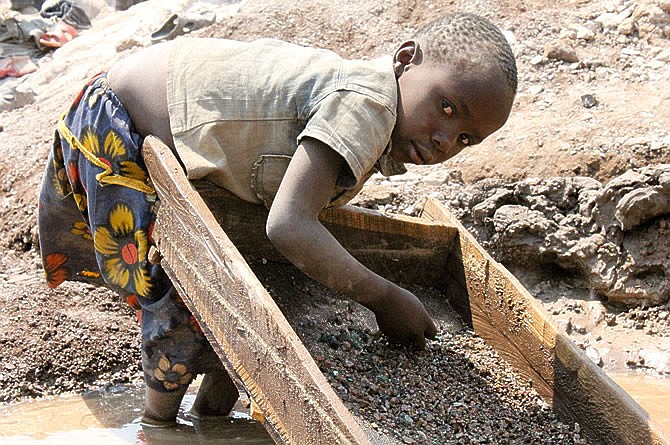
*What about the cobalt sourced from DRC known for its poor human rights record:


Shockingly, 40,000 children are estimated to be employed in artisanal mines in southern DR Congo... -- reveals that human rights abuses are widespread in the sector and can occur within both industrial and artisanal mines...the country is rated "extreme risk" for child labor, modern slavery, trafficking and occupational health and safety.”


*Finally, in regard to an EV, what is the total carbon footprint if its components are extracted and processed from all over the world? In fact, what are the water, air, and soil footprints of producing these vehicles that are supposedly better for the environment?


What became apparent as I went down the car industry and EV rabbit holes of research is this: electric vehicles emanate from the same shortsighted paradigm of the fossil fuel industry. That I could not find data on the entire lifecycle footprint of an EV is evidence that this solution still comes from the mindset of externalized costs. In other words, we are willing to ignore the true, complete cost of EVs so some individuals can feel like they're doing good for the planet. 


Actually that’s why I bought an EV. I wanted to feel like I was doing something good for the planet and its inhabitants. I wanted to trust that EVs were a truly clean solution to the dirty fossil fuel industry. They are not. EV are not produced more justly or sustainably than vehicles with internal combustion engines; a criteria for my car purchase. With my EV, I am aware that I have not changed systems by my individual action. Actually, consider the vast amount of precise minutiae vehicles offer drivers as metaphor for our hyper self-focus. All I've done is bought into a green version of extractive capitalism, which is still all-about-me-ism. It grieves me to participate in systems that elevate my self-interest over the wellbeing of Earth and her inhabitants. 


Green solutions derived from extractive capitalism are another manifestation of supremacy in the Environmental Movement of the Global North. Environmental supremacy justifies ecological apartheid, ecosystem destruction, species extinction, unjust labor practices, the disintegration of local communities and cultures, sacrifices the health, safety, well-being of some of our planet-mates for the ‘greater good’ of reduced carbon emissions. Particularly egregious as we know electric vehicles are, by their nature, an unsustainable solution just as dirty as fossil fuels. Perhaps they’re spiritually dirtier than fossil fuels because they are touted as clean by those who know full well their true cost. 


This notion of one's personal environmental piety within flawed systems is a part of the false narrative of supremacy. Like the amenities of modern vehicles, focusing on one's individual actions, channels one's gaze on oneself; as though one's actions and choices exist only within one's siloed bubble, within one's vehicle. To advocate green individual choices for a handful of the world's population at an unknown cost to other beings and their homes worldwide, is a form of supremacy. That the extraction and processing of raw materials happens in parts of the world already precarious geopolitically, societally and with little access to basic resources, make that supremacy criminal. Consider too that ecological disruption most severely impacts those already marginalized. 


At the brink of extinction, EVs hardly answer what we are called to.


What we are called to is atonement for our reckless regard of the elegant intricate interconnected ecosystems that our lives are literally dependent on and we are arrogantly ignorant of. We are called to lament the damage we have done to ourselves and other beings, including Earth. We are called to reckon with our hubris, in the forms of species supremacy and within that, white supremacy. We are called to stop operating as though any being or part of our home can be sacrificed.


We are called to care deeply about the safety, comfort, and well being of others, not just ourselves. We are called to a radically deeper, wider, more profound understanding of what it means to be each other's keepers and planet-mates in this sacred home shared with nearly 9 million species. We are called to develop a new relationship with our earth and all its inhabitants. This is a divine opportunity to radically reexamine every aspect of how we live rather than adopt strategies to maintain a failing way of life.


Maybe if we pulled ourselves away from the buttons and screens in our cars, from the incessant noise regarding our individual wants and needs, our individual piety, we’d realize that.

Tuesday, July 7, 2020

the habits we inhabit


As I round the corner onto my block, I notice a car parked under the shade of a tree across the street. It’s an unfamiliar vehicle but it’s a familiar occurrence: someone’s lunch break. The windows are usually up on the idling car and the person is usually staring at their phone. I near the car in time to see the driver roll down the window just enough to flick a cigarette out.

This annoys me.

In the ninety minutes I’ve been walking I have seen enough fireworks debris to set up my own explosive-free display. I’ve crisscrossed sidewalks to avoid what I consider militarized lawn care. And now on my block, a person litters. I have the urge to pick up her cigarette butt and knock on her window. But Rona stops me. Instead I tear a leaf from my neighbor’s redbud and scoop the butt with it. When we catch each other’s eye, I resist the urge to scrunch my face and wag my finger, like the old schoolmarm I am. Instead I turn away and keep walking. Even though it was awkward, I did the right thing for the planet. I feel righteous. 

For about two seconds.

Then I realize it doesn’t matter. I mean, what difference does it make? There are more pressing issues. Like why do we need this? And what is the externalized cost of it and who pays it?


And what’s the point of an educational system that doesn’t teach citizens to respect water? You know if it’s on the ground it ends up in our water, right?


And what kind of society creates work environments where people want to sit in their cars for an hour to eat a meal out of a paper bag or Styrofoam box? Or is that the only way some people get time to themselves?

As I enter my house holding the butt in the leaf, I wonder what the woman thought. Was she angry? Embarrassed? Did she have a gun to pull out if she was either? Did she care? What was happening in her life that made sitting in her car for lunch in a strange neighborhood the choice for today?

I think that’s the saddest part of all: I’ll never know.

The environmental movement sure taught me a lot about what harms our planet. But it overlooked the part about how deeply entrenched we all are in habits, rituals and systems that harm us. And each other.

Maybe it’s no accident the redbud leaf is shaped like a wide open heart.

 I've moved!  Please visit me at   https://www.marysilwance.com /