Friday, June 12, 2020

Three Voices. One Story.


by Mary Silwance, Dawn Downey, & Jessica Conoley
 

Mary: If my day wasn't weird enough yesterday, I have a story for you two. A woman I know via environmental stuff called me Friday to let me know that a shamanic practitioner friend of hers created a shielding powder for POC to sprinkle around themselves/their cars and homes to protect them from racism. She was offering 10 people this powder for free and my friend thought of me. The friend said this wouldn't change systemic racism but it would keep individuals safe. What does one say to such an offer?

Dawn: I love the shamanic racism protection powder, because not too many things leave me speechless anymore. It's a writing prompt on steroids. You could go in so many directions---magical realism! Humor. Political satire. Sci Fi. Fantasy. Dystopian fiction---who are the ten people who get the powder (why is Mary one of them?) and what happens to the rest of society? A nature story--what are the plants and herbs that go into making it. Which of course leads to cook books! Racism Protection Powder is the best thing I've heard all week. Thank you!

Mary: Thank you for making me laugh, Dawn. It might tickle you further to know that the Powder was offered by white women. To be fair, I want to be open to diverse spiritual practices and experiences and not impose my judgement, biases, stereotypes and fears onto a potentially powerful/redemptive other worldly experience. But yea. Um, what? And I think I got the golden ticket because the environmental gal and I had a conversation the day prior to George Floyd's murder so I was on her radar.

Dawn: Oh joy! There's a whole other angle to the story...white privilege! Because white women had access to Racism Protection Powder even before people of color did!

Jessica: This is the weirdest email to come home to ever, and my brain doesn't know what to think.

Dawn, your writing prompts are straight up genius face, because yes so many questions are invoked by the introduction of such a magical powder to the universe.  But then it makes me think of the book [The Radium Girls: The Dark Story of America's Shining Women by Kate Moore] where they sold Radium as a cure-all, but really it gave everyone radiation poisoning and they died the most horrible deaths I've ever read about, so I'm gonna say my initial inclination is I don't trust it...

Mary: I don’t usually write about this stuff, but here goes:

The shamanic practitioner from upstate New York created a powder my friend, who I want to now refer to as an acquaintance, offers me. It is the morning of the first of many days of protests after the lynching of George Floyd, the latest lynching white Americans are-yet again-shocked by. The Shamanic practitioner from upstate New York has created a powder that POC can sprinkle on their bodies, their cars, their homes, to protect them from racist acts. She is offering the first 10 vials of the POC Protection Powder for free, and my friend, I mean acquaintance, wants to know if I want one.

At first I am confused. Why is she offering this to me? I’m Coptic. Which is to say, I am Egyptian Orthodox. Which is also to say, no one in the Midwest knows what that is. And, like other Egyptian immigrants I know, I’ve spent most of my life striving for whiteness. If we can’t fully be who and what we are, we seek assimilation into the culture that seems most ‘successful.’

It’s only recently I’m coming to understand myself as a brown woman and understand I’ve always been seen as such. Hence the offer of POC PP. So I do what I have also spent most of my life doing when white women say things that make me uncomfortable: I respond deferentially, almost obsequiously.Told myself, she’s trying to help, she thought of me. Told her I’d think about the POC PP. I thank her. Repeatedly. But in my mind she shifted from friend to acquaintance. And she won’t know because that’s something else I’ve always done: take that slap of ignorance and use it as a slab of concrete for the wall between us.

I want to believe in Shamanic work even if it is done by white people. So I try to imagine POC sprinkling this powder in their beds, shaking some in running shoes, slapping it on necks like aftershave. I imagine it in a bag of skittles or on the couch when playing video games or used as seasoning at a BBQ.  I try to imagine this powder snowing on red, yellow, brown and black bodies in ghettos, reservations, cages and prisons, freeing communities.

But the Shamanic practitioner from upstate New York provides this unnecessary disclaimer: it will not dismantle systemic racism. 

Yea. Obviously.

It’s made to be sprinkled on the wrong people.

Dawn: Mary, whoa! Your conclusion blew me away. You're right, of course, absolutely. I was nodding right along with you through the part about responding deferentially. I do that, too, and after my deferential response, I'm pissed at myself. It's embarrassing to admit.

I appreciate your collecting your thoughts about the shamanic "gift" and expressing things so clearly. I'm sorry that one of the casualties was your friendship. And thank you for calling the crime by its true name--the lynching of George Floyd.

Mary and Jessica, you two are my safety zone.

Jessica: Mary, you're such a good writer. And I feel like maybe the email was written without a ton of editing or revising, and it needs none. Because it's phenomenal.  The way you lead us through every aspect of it to the straight up correct conclusion is genius. 

Dawn, I've never thought about the word lynching until you did a Color Eater edit one week. In the burn-her-at-the-stake scene I had used the word lynch, and you corrected me.  That was the first time I realized that your experience of the word & mine were two completely different things.

This powder thing is the perfect example of white people f-ing it up.  This is us saying, let me fix your problems for you, be the white savior, and I'll feel better about the situation.  All the while we never stop to examine what is inherently flawed in our thinking and how we're playing a part, and we're the ones who need to change our behavior.

As your spy to the inner working of the behind the scenes white world I want to let you both know that in the past 48 hours I have had conversations about race with 6 other white women.  I cannot think of any other time in my life I have actually had conversations about race with white people. I remember my mom telling me not to use the n-word when I was in elementary school, but that is honestly & entirely the white social race conversations I can remember.  So it feels like there's a waking up behind the curtains that you may not have access to.  I feel like the conversations are the tiniest first steps, and that gave me some hope.  I hope by sharing this with you it gives you a little bit of hope too. 

I know a lot more than talk has to happen, and there's sooooo far to go. But the fact these women are even attempting to find the words to have these conversations means they're also practicing hard conversations so when we go into rooms of all white people we can say the things that have been unsaid for too long.

Mary: Thank you, Jessica and Dawn for your affirming responses to my essay. It is hard for me to justify weaving my experiences as a brown person into the narrative of American culture since I don't fit into the standard identity categories. Jessica thank you for the heartening glimpse behind the curtain. May these conversations be ongoing beyond the current crisis.
 
 ***

Things We’re Learning.


Mary: I’m learning that once you begin to peel back supremacy you see how deeply ingrained it is within yourself and society. There is so much pain, loss and disillusionment upon waking up to it. But here’s the thing about that. Your personal story is intimately and uniquely intertwined with the larger societal story. As you discover and reflect on your internalized stuff you see how you uphold supremacy within and without. I try to be curious and present to where I’m constricted, blind, afraid, resentful, angry and ask why. This is where I get to evolve. Since it’s taken centuries to build these constantly influencing and unconscious ways of thinking and behaving, it’s going to take a long meticulous and mindful time and engagement to construct a pluralistic society. We cannot dismantle racism from without until we dismantle it from within.

Dawn: I’m learning there’s no escape from the outside world. I’ve turned off the computer, locked myself out of the internet, and left the television room when the news comes on. Under quarantine, I don’t have to leave the house at all. The racism quagmire of the country gets in, anyway.

Since hiding is not possible, I’m learning to choose the manner in which I respond, and it’s different every time. Sometimes, I write. Last week, I signed a petition and donated to ColorofChange.org.Yesterday, I responded by deleting an email from someone giving me advice about how to respond.

Finally, I’m learning that my sense of urgency has waned.

Jessica: White culture unconsciously taught me it is rude to have conversations that make people uncomfortable. Conversations that impact change are going to make you uncomfortable, and by participating you are likely going to make other people feel uncomfortable.  I feel like I’m “doing it wrong” every time I open my mouth in race based conversations, but I won’t figure out how to “do it right” unless I practice.

And, if you don’t know what to say, that’s okay.  LISTEN. We (white people) have had the floor for a hell-of-a-long time.  It’s our turn to listen and learn.

I found the book Waking Up White: And Finding Myself in the Story of Race by Debby Irving to be really enlightening.
***
 
Mary did rewrite that essay, and it’s fantastic.  Read the polished, fleshed out version of White Pow(d)er on her blog.

Read Mary Silwance at: http://tonicwild.blogspot.com/
Read Dawn Downey at: http://dawndowney.com/
Read Jessica Conoley at: https://jessicaconoley.com/

White Pow(d)er


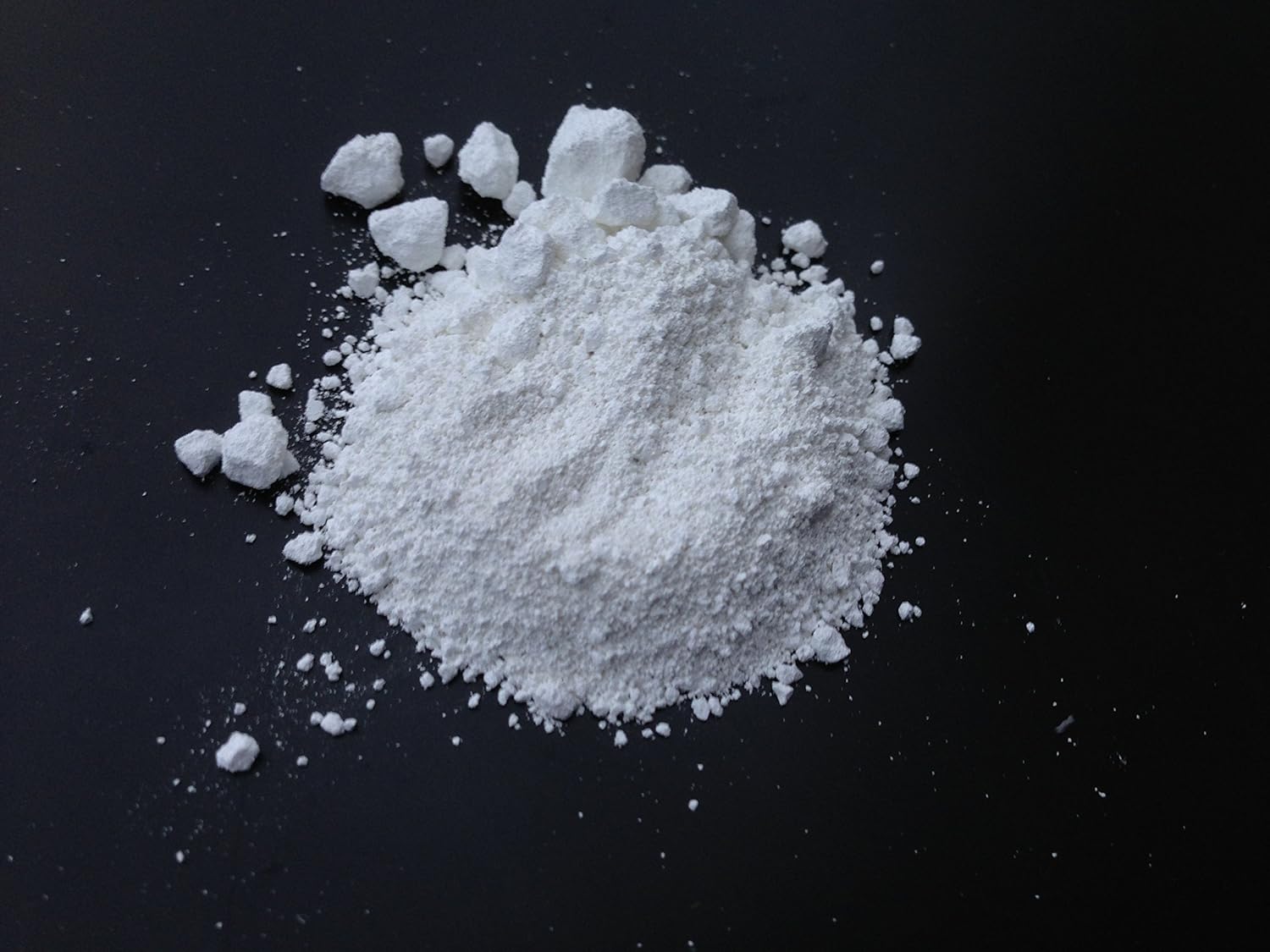
Amazon.com : GlobMarble Titanium Dioxide White Concrete Pigment 1 ...

The Shamanic practitioner from upstate New York created a powder that my friend offers me. It is the morning of the first of many days of protests after the execution of George Floyd, the latest lynching white Americans are-yet again-shocked by. The Shamanic practitioner from upstate New York created a mixture POC can sprinkle on their bodies, their cars, their homes, to protect them from racist acts. The first ten vials of the POC Protection Powder are free and my friend is letting me in on this free-for-a-limited-time-only protection.

At first I am confused. Why did she think of me?

I’m Coptic. Meaning, I am Egyptian Orthodox. And, like other Egyptian immigrants I know, I’ve spent most of my life striving for whiteness. Since we can’t fully be who and what we are in the US, we assimilate into the culture that’s most ‘successful.’ In that pursuit, like many Middle Easterners, I’ve disassociated myself from POC.

It’s only recently I’m coming to understand myself as a brown woman and realize I’ve always been perceived as such. Hence the offer of POC PP. At first I relish the acknowledgement of my brownness. But it is fleeting. She categorized me-a supremacist habit, no? I’ve not shared my experiences or reflections about my ethnicity with her. Why does she get to make an assumption about me? OH. She thinks I might be in constant jeopardy. I am.

But not in the ways she assumes.

To be Coptic, an immigrant and American means to tread in the ocean of ambiguity. I am pulled by the undertow of internalized supremacy while the unmet hunger for belonging crashes over me, each wave a reminder that I am not black, white, Latinx or Asian, the known identity harbors in the Midwest. Since Copts are a persecuted minority in Egypt, even the Middle Eastern harbor is fraught; I have internalized the antipathy toward Muslims common in the Coptic community.

I respond as I have most of my life when white women say things that make me uncomfortable: I answer deferentially, almost obsequiously. Tell myself: she’s trying to help, she thought of me. Tell her: I’d think about the POC PP. I thank her. Repeatedly. Numbly. But in my mind she shifted from friend to acquaintance. And she won’t know that because that’s something else I’ve always done: use that slap of ignorance and my discomfort as a slab of concrete for the wall between us.

I try to imagine POC spraying protection powder in beds, shaking some in running shoes, daubing it on necks like aftershave. Maybe in a bag of skittles or on the couch when playing video games or used as seasoning at BBQs.  I try to picture Indigenous women combing it into their hair; children at the border nestling with it on concrete floors under sliver blankets. I imagine it swept in the halls of schools in prison pipeline zip codes. I try to imagine this powder snowing on red, yellow, brown and black bodies in ghettos, reservations, cages and prisons, liberating entire communities, countries even. How much POC PP is there?

I want to believe in Shamanic work, even done by white people. But the Shamanic practitioner from upstate New York provides this unnecessary disclaimer: it will not protect against systemic racism.

Yeah.

Obviously.

Look who created it.

Friday, April 17, 2020

compost in the time of corona


It is time to turn the compost.

Underneath the rotting vegetables, coffee grounds and grass clippings, rich soil has been forming for years. I untwist the ends of the hardware cloth to reshape the cylinder anew next to where it used to stand. Once I have created a new cylinder, I will transfer the contents from the old compost pile into it.

Decomposing organic matter is the aromatic harbinger of the growing season. This year, my task corresponds with the backyard neighbor’s blooming Nanking cherry, infusing the compost stink with sweetness. Spring 2020, however, Covid-19 weighs heaviest in the air.

Tears well as I work, listening to the news: those incarcerated, detained, caged have no chance of avoiding infection in crowded, unsanitary quarters; the disproportionate death toll on African Americans; the rise in domestic violence; the rise in livestreaming child sexual abuse; medical personnel in trash bags like lambs to slaughter. One person every 47 seconds dies of Covid-19…

Gardening anchors me, provides a physical outlet for my grief.

I scoop broken eggshells, slimy cucumbers, black banana peels with my pitchfork into what will be the bottom of the new compost pile. I transfer sheaves of paperboard and brown leaves, the wilted loops of squash and sweet potato vines, the plant carcasses from a black thumb neighbor, still in the shape of pots. The compost bin holds what we no longer need or want, what we’ve neglected, allowed to spoil.

It is full of our refuse.

Waist high, my bin is also full of insects, worms and sometimes mice. By the scatter around the bin, I suspect other critters visit the Compost Buffet. Round the clock and round the calendar, various beings thrive on what we consider waste. I convey them to their new home on my pitchfork as they wriggle and writhe, their discreet hidden lives suddenly exposed. In this way compost provides community—a mutualistic ecosystem where everyone needs are met.

Soon my backyard neighbors come outside to do their own work along a fence line we share. The next door neighbor steps out onto her back porch to say hello. A dear friend wrangles a large, persnickety stump out from where I want to add another vegetable bed. Mindful of keeping each other safe, we maintain distance. I am grateful to see them; in this singular moment, we are each well. Compost is community for me too since I share my bin with neighbors. Their scraps and trimmings participate in becoming. 

That’s what a compost bin is mainly full of: becoming.

I scoop Dan’s adventure in vegan flan and remnants of Pat’s haircut into the new pile. Thousands of decomposers shelter and feed here while the alchemy of time, weather and their refuse transform into soil.

Soil nurses the various seeds I gleefully buy when trees are still bare, nourishes the transplants I am determined to find room for like unexpected guests to the dinner table. Last year’s decomposing tomatoes become a crucible for this summer’s tomatoes. Soil is the soul of becoming.

Soil arises from the carcasses of what was, allowing what is to become what will be. I continue my work, inhaling the mixture of rot, Nanking Cherry and the specter of pandemic. 

As the pandemic spreads, inequitable, long crumbling institutions acutely reveal the devastating gaps in social safety nets through which people plummet, suffer and die. To sustain capitalistic avarice and the systems that prop it up, would be like expecting black peels to provide bananas, wilted vines to produce fruit. They simply do not hold what we need. What was, must be discarded for the rot it is. 

I think of Arundhati Roy’s words:

The pandemic is a portal between one world and the next. We can choose to walk through it dragging the carcasses of our prejudice and hatred, our dead ideas and our dead rivers. Or we can walk through lightly ready to imagine another world. And ready to fight for it.

"We" is a critical component of how we imagine another world. This liminal time confirms, once again, thriving or surviving don't happen through solitary effort. Similarly, I do not produce veggies on my own: my neighbors' refuse, decomposers, my friend's muscle, the gift of time, seasons, sunshine, rain, mulch from Missouri Organic, seeds, transplants and chicken manure from Kansas City Community Garden Center, gardening lessons from friends and neighbors all go into my garden beds to provide squash, garlic, potatoes, arugula, carrots and so on. We walk through this portal together or not at all. 

For a gardener, dead things have value. Through purposeful release in an intentional container, through microscopic parsing, through the alchemy of time and community, rotten things transmogrify. During this season of distancing and few distractions, may the thousands of us who have the privilege of time, income and true shelter, become decomposers. Let us shred the carcasses of hate, dead ideas, moldy institutions. Let us make rich soil from what was. Amidst the stink of rot and death, what sweet hope wants to bloom like my neighbor's Nanking cherry? We carry the seeds of what the world can be: a mutualistic ecosystem in which the needs of all beings are met.

Saturday, February 29, 2020

even the phrase 'each other' doesn't make any sense*


My February calendar picture is of two Gentoo penguin chicks. One bird seems to have its wing around the other. That one also looks squattier than the taller, thinner one. Is it self-conscious the way I was around my tall, thin friends as a youngster? The penguins look like they’re pursing their bills like my daughters and their friends pucker when taking selfies. Will they take a bazillion more to get it just right, before posting? Is the light hitting? It’s easy to see the penguins through a human lens, so accustomed are we to anthropomorphizing nonhuman beings. Remember pet rocks or the movie Zootopia? 

I realize I know nothing about penguins. I suppose they have the same needs: food, water, shelter, community but are we always self-referencing? I stare at the penguins and wonder if I can see penguin in myself. They are alien and have nothing to do with me. What's more, I don't want to connect to them. I have better ways to spend my time than to understand penguinness. My perception has not been trained to do this and my imagination fails. I can't get past my anthropomorphism. 

We are told the road to empathy is to see ourselves in the other. Yet we other the other so we don’t have to be empathic: Indigenous people are savages, black people are subhuman, women are inferior, transgender people are an abomination, and so on; insert prejudice here. This allows us to select who we will treat humanely. Has not every holocaust hinged on spurious distinctions between us and them?

As an Egyptian, I grew up with prejudice against sub-Saharan Africans as well as African Americans. I was admonished to straighten my hair and stay out of the sun so I wouldn't be mistaken for a black person. As I work to address this inherited bias, sometimes I am confronted with my knee jerk racism: 

They are alien and have nothing to do with me. I don't want to connect to them. I have better ways to spend my time than to understand blackness. My perception has not been trained to do this and my imagination fails. I can't get past my prejudice.

I wonder if a truer road to empathy might be to learn the other so that distinctions are honored.

There are 195 countries, each with myriad cultural pockets, over 6000 languages and nearly nine million species on our planet. Nature itself is systems filled with myriad beings synchronized with each other’s distinctions to survive. Dignifying others based on similarity fosters ignorance and foments an increasingly shallower pool of who or what we dignify. It’d be like extolling only blue when the planet is a giant crayon box. This vast and minute variation is a testament to the sacred creativity manifest in our common home.

If my regard of Gentoo penguins stopped at my anthropomorphism, what I projected onto them based on what I perceived as similar, could I know what they specifically need to avoid extinction? Only by becoming familiar with their uniqueness can I properly value and thus advocate for their wellbeing.

Before I turn the page to March, I look up the definition of leap day: Leap days are extra days added to the calendar to help synchronize it with Earth's orbit around the sun and the actual passing of seasons. 

If my regard for sub-Saharan Africans and African Americans remains entrenched within the othering lens of prejudice, how can I value and honor the cultural needs and practices of sub-Saharan Africans and African Americans? 

There are humanitarian crises at borders worldwide, millions in refugee camps as well as caged; and nonhuman beings, like the Gentoo penguins, are increasingly endangered. Empathizing with only who or what we regard as similar jeopardizes who and what we regard as dissimilar.

Leap day 2020 comes at a time when we need to catapult ourselves to a level of empathy that requires awareness of and response to distinct needs. We are in peril. Our collective survival requires us to leap into synchronicity with who and what we regard as other. We need each other. We need each others' distinctions. We need the humility that comes with not centering ourselves. We don't have extra days to count on.


*Rumi

 I've moved!  Please visit me at   https://www.marysilwance.com /