Sunday, August 1, 2021

doctrine of signatures


Who are we

to deem You

invasive?


We, the humans who

don’t restrain ourselves  

overstep every ecosystem

to satisfy whim

                        restrain You from inhabiting a wood.


We, who

trash handy plantain, dandelion, purslane

trash intact habitat  

for junk food and trash

trash Your berries as junk.


Who

carpet creation with concrete

            choke green photosynthesis with grey paralysis

            to outspread our paths and palaces

                        fear Your presence as aggressive.


Humans who

through scientific prowess

menace kith and kin

with extinction

extinguish Your migration.


We, the humans who

hack the yielding hips of Earth

explode Her breasts    mine Her arteries

for our addictions

stymie Your vining through poison munitions.


Who we are

cannot fathom

what Earth is unfurling.


May                             be

Honeysuckle

                                                            metaphor a mirror

                                                            a reflection we refuse

to reflect upon.


                                                            May                 be

                                                                        Honeysuckle

                                                            afflict a thicket with antidote

                                                            for the plagues we inflict

                                                            upon each Other.     


                                                            May         be

 Honeysuckle

                                                            serve Her purposes—

emissaries on

reconnaissance.


May be

Honeysuckle

are decomposing

this 

Now.


Maybe

Earth wants

Her biome

we call home

to become

fallow

           for

   what 

     may

follow    

Sunday, July 18, 2021

spinning self


I want to be a spider


make home

wherever I land—

trumpet vine, clothesline

rafter, corner, catalpa

Canada, Kentucky, Kathmandu


spin

self into silky rhyme scheme

of geometry to discover

my body’s poetry


shimmer

in Sun beams when

they greet me in Forest

and melt into Shadow

when I want solitude


savor

whatever comes my way

trusting its nourishment

trusting I seize

what I need


    and when Storms

endanger or destroy 

what I embody 


may I leap into

the unknown

knowing

I always 

catch

myself


Tuesday, September 22, 2020

sunflowers and selfies


To catch the 7:04 sunrise, we left in the early dark. Along the forty minute drive, we savored hot coffee and morning stillness while alert for deer. As the cityscape unraveled into countryside, we felt ourselves expand. The dawn revealed sheer white sheets of mist over fields of late soybean, speckled golden brown. At times skunk peppered the cold air.

For weeks, friends had posted pictures of themselves on social media in a sea of sunflowers. Their smiling faces peeked up at brown seedheads bigger than basketballs, their toddlers shaded under petals like little elves. Based on their pictures we imagined acres of sunflowers, their splendor magnified through the rays of the rising sun. But when we turned down the final rural two lane road to our destination, we felt underwhelmed. Then, disillusioned.

Indeed there were acres of sunflowers. I glanced around and noticed smiley faces and hearts in some of the flowers' brown faces. Seeds deliberately pulled by humans. This felt disrespectful, like a mutilation. Why assert, mark territory in this heedless way?

As we approached the fields we sought a path, not wanting to disturb or trample vegetation underfoot. But the ground was hard soil without mulch or weeds. Maybe a stray morning glory vine or bindweed, but it was mostly barren. This field of gorgeous sunflowers typified industrial farming. This was monoculture. Of course it was. What did I expect?

Monoculture is the agricultural practice of producing or growing a single crop, plant or livestock species, variety or breed in a field or farming system at a time.

Monoculture is destructive. It hinders beings from living where and how they're naturally inclined to, as multi-species ecosystems. Healthy ecosystems present a pluralistic population that cohabitate in mutually beneficial, self-sustaining ways. A mono-crop field, in this case for sunflowers, requires intensive chemical intervention. Because the inputs to maintain an artificial habitat for a target species compromise that habitat, more chemicals are required to support the species, which degrades water, air and soil. 

Our ecological collapse and extinction crisis are driven in large part by monoculture. How can I celebrate this albeit stunning instance of it, knowing it is the brainchild of practices that ruin habitats for living beings?

I stood on the cracked bald ground, a haze obscuring the sunrise. I felt sad. What is monoculture but the elevation or separation of a species, breed or genetic strain at the expense of others? At the expense of the collective good? I know this seems a stretch, but glorification of monoculture is connected to ethnic cleansing, racial profiling and race based subjugation that have devastated people the world over. Besides, there is little life for these sunflowers shivering in the morning cool when you think about what life could have been if they existed in a prairie or plains ecosystem with the other plants, critters and insects that make up their natural family. Were they lonely?

In case you want to dismiss my question as anthropomorphic, remember that the science which once claimed certain races couldn't feel pain and were intellectually inferior created monoculture farming, is also the science now 'discovering' plants communicate and in their own plant way, form community. 

A truth long known by peoples who honored belonging to mutually beneficial pluralistic ecosystems. 

But if you're just there for the selfies and hoped to catch the sun shimmer on the green, yellow and brown bodies of sunflowers, none of what these beings actually need--matters.

That's how supremacy works.
 

Wednesday, August 26, 2020

a case against EVs


Over the last twenty years my decision-making has been increasingly haunted by the ways extractive capitalism foments injustice and ecological collapse. When my old car finally died, I searched for a vehicle that was produced more sustainably and justly than the current system of extraction, manufacturing, shipping and disposal provides.

 Like many environmentalists, I am intentional about living lightly on the planet. That is, I purchase little newly manufactured goods and repurpose, reuse and share instead. Therefore, I wanted a used manual transmission EV. 


I was not prepared for car shopping.


I found, instead, vehicles with an array of technological advances: cars that self park, slow down when too close to other vehicles, virtual bumpers, keyless fobs that communicate with the vehicles they're paired with. And, individual built-in screens for passengers.


And wow, the amount of information the dashboard offers. MPG, tire pressure, outdoor temperature, oil pressure, engine temperature. Cardinal directions are pretty much irrelevant with built-in navigation to your destination. You can listen to anything from anywhere on the planet. You can even heat and cool your butt or the butt of whoever is riding shotgun.


There are so many buttons: start the car, shift gears, open windows, stream audio, park, and warm butts. Oh and steering wheels aren’t just for steering any more. Buttons there too so you can control amenities without lifting your hands off the wheel. There’s even a button to warm the steering wheel. 


Unfortunately at the time, EVs didn’t come in a stick. So I got a five-year-old EV, base model, with the least amount of electronic bells and whistles.


I came away slightly elated. At least I wasn’t trafficking in all the fluids of an internal combustion engine. At least I could charge this car at home and not rely on gasoline. At least it was a step away from fossil fuels. And, if I got solar panels, then I’d be as fossil fuel free as possible.  


I also came away deflated. I wanted a vehicle produced with less harm to my planetary housemates of all species. Is all that technology or EV vehicles themselves possible without extractive, unjust, unsustainable processes?


I became even more deflated after doing some research.


*I wanted to know the total number of vehicles ever produced: we don’t know. But we do know the number of cars produced yearly steadily increases to upward of 70,000.


*I wanted to know what happens to spent tires. Did you know yearly the US alone generates 246 million tires?


*Although vehicles are largely recyclable (80%), I could not find information on the percentage of a new vehicle actually constructed from repurposed materials.


*While modern vehicles have between 30-100 electronic features, there was zero information about what happens to automotive E-waste. Further, the relevant articles were at least five years old. Are the extraction and disposal of electronics components in EVs more sustainable and just than conventional E-waste?


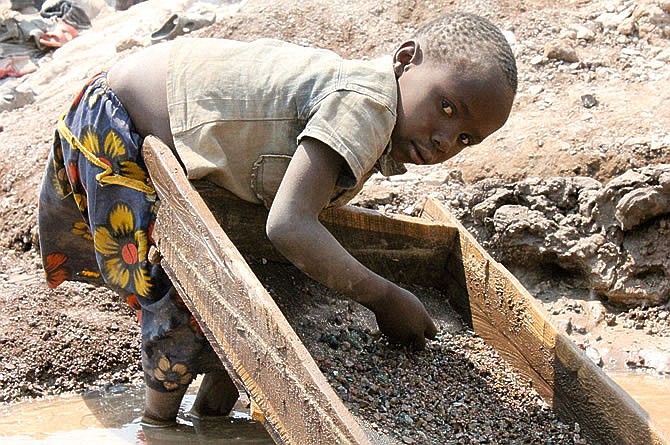
*Since I bought an EV, I wanted to know the extraction impacts of lithium ion batteries. Does the process follow the pattern of oil, coal and natural gas? That is, does it destroy the local ecosystems and economies as those industries do? Are materials mined through slave or child labor? Is there a connection between MMIW at the extraction sites of the EV industry as in the fossil fuel industry? Is there a connection between Bolivia, Chile and Argentina becoming lithium sources in the global economy while Latin America becomes increasingly more lethal for land defenders?


*What about the cobalt sourced from DRC known for its poor human rights record:


“Shockingly, 40,000 children are estimated to be employed in artisanal mines in southern DR Congo... -- reveals that human rights abuses are widespread in the sector and can occur within both industrial and artisanal mines...the country is rated "extreme risk" for child labor, modern slavery, trafficking and occupational health and safety.”


*Finally, in regard to an EV, what is the total carbon footprint if its components are extracted and processed from all over the world? In fact, what are the water, air, and soil footprints of producing these vehicles that are supposedly better for the environment?


What became apparent as I went down the car industry and EV rabbit holes of research is this: electric vehicles emanate from the same shortsighted paradigm of the fossil fuel industry. That I could not find data on the entire lifecycle footprint of an EV is evidence that this solution still comes from the mindset of externalized costs. In other words, we are willing to ignore the true, complete cost of EVs so some individuals can feel like they're doing good for the planet. 


Actually that’s why I bought an EV. I wanted to feel like I was doing something good for the planet and its inhabitants. I wanted to trust that EVs were a truly clean solution to the dirty fossil fuel industry. They are not. EV are not produced more justly or sustainably than vehicles with internal combustion engines; a criteria for my car purchase. With my EV, I am aware that I have not changed systems by my individual action. Actually, consider the vast amount of precise minutiae vehicles offer drivers as metaphor for our hyper self-focus. All I've done is bought into a green version of extractive capitalism, which is still all-about-me-ism. It grieves me to participate in systems that elevate my self-interest over the wellbeing of Earth and her inhabitants. 


Green solutions derived from extractive capitalism are another manifestation of supremacy in the Environmental Movement of the Global North. Environmental supremacy justifies ecological apartheid, ecosystem destruction, species extinction, unjust labor practices, the disintegration of local communities and cultures, sacrifices the health, safety, well-being of some of our planet-mates for the ‘greater good’ of reduced carbon emissions. Particularly egregious as we know electric vehicles are, by their nature, an unsustainable solution just as dirty as fossil fuels. Perhaps they’re spiritually dirtier than fossil fuels because they are touted as clean by those who know full well their true cost. 


This notion of one's personal environmental piety within flawed systems is a part of the false narrative of supremacy. Like the amenities of modern vehicles, focusing on one's individual actions, channels one's gaze on oneself; as though one's actions and choices exist only within one's siloed bubble, within one's vehicle. To advocate green individual choices for a handful of the world's population at an unknown cost to other beings and their homes worldwide, is a form of supremacy. That the extraction and processing of raw materials happens in parts of the world already precarious geopolitically, societally and with little access to basic resources, make that supremacy criminal. Consider too that ecological disruption most severely impacts those already marginalized. 


At the brink of extinction, EVs hardly answer what we are called to.


What we are called to is atonement for our reckless regard of the elegant intricate interconnected ecosystems that our lives are literally dependent on and we are arrogantly ignorant of. We are called to lament the damage we have done to ourselves and other beings, including Earth. We are called to reckon with our hubris, in the forms of species supremacy and within that, white supremacy. We are called to stop operating as though any being or part of our home can be sacrificed.


We are called to care deeply about the safety, comfort, and well being of others, not just ourselves. We are called to a radically deeper, wider, more profound understanding of what it means to be each other's keepers and planet-mates in this sacred home shared with nearly 9 million species. We are called to develop a new relationship with our earth and all its inhabitants. This is a divine opportunity to radically reexamine every aspect of how we live rather than adopt strategies to maintain a failing way of life.


Maybe if we pulled ourselves away from the buttons and screens in our cars, from the incessant noise regarding our individual wants and needs, our individual piety, we’d realize that.

Tuesday, July 7, 2020

the habits we inhabit


As I round the corner onto my block, I notice a car parked under the shade of a tree across the street. It’s an unfamiliar vehicle but it’s a familiar occurrence: someone’s lunch break. The windows are usually up on the idling car and the person is usually staring at their phone. I near the car in time to see the driver roll down the window just enough to flick a cigarette out.

This annoys me.

In the ninety minutes I’ve been walking I have seen enough fireworks debris to set up my own explosive-free display. I’ve crisscrossed sidewalks to avoid what I consider militarized lawn care. And now on my block, a person litters. I have the urge to pick up her cigarette butt and knock on her window. But Rona stops me. Instead I tear a leaf from my neighbor’s redbud and scoop the butt with it. When we catch each other’s eye, I resist the urge to scrunch my face and wag my finger, like the old schoolmarm I am. Instead I turn away and keep walking. Even though it was awkward, I did the right thing for the planet. I feel righteous. 

For about two seconds.

Then I realize it doesn’t matter. I mean, what difference does it make? There are more pressing issues. Like why do we need this? And what is the externalized cost of it and who pays it?


And what’s the point of an educational system that doesn’t teach citizens to respect water? You know if it’s on the ground it ends up in our water, right?


And what kind of society creates work environments where people want to sit in their cars for an hour to eat a meal out of a paper bag or Styrofoam box? Or is that the only way some people get time to themselves?

As I enter my house holding the butt in the leaf, I wonder what the woman thought. Was she angry? Embarrassed? Did she have a gun to pull out if she was either? Did she care? What was happening in her life that made sitting in her car for lunch in a strange neighborhood the choice for today?

I think that’s the saddest part of all: I’ll never know.

The environmental movement sure taught me a lot about what harms our planet. But it overlooked the part about how deeply entrenched we all are in habits, rituals and systems that harm us. And each other.

Maybe it’s no accident the redbud leaf is shaped like a wide open heart.

Friday, June 12, 2020

Three Voices. One Story.


by Mary Silwance, Dawn Downey, & Jessica Conoley
 

Mary: If my day wasn't weird enough yesterday, I have a story for you two. A woman I know via environmental stuff called me Friday to let me know that a shamanic practitioner friend of hers created a shielding powder for POC to sprinkle around themselves/their cars and homes to protect them from racism. She was offering 10 people this powder for free and my friend thought of me. The friend said this wouldn't change systemic racism but it would keep individuals safe. What does one say to such an offer?

Dawn: I love the shamanic racism protection powder, because not too many things leave me speechless anymore. It's a writing prompt on steroids. You could go in so many directions---magical realism! Humor. Political satire. Sci Fi. Fantasy. Dystopian fiction---who are the ten people who get the powder (why is Mary one of them?) and what happens to the rest of society? A nature story--what are the plants and herbs that go into making it. Which of course leads to cook books! Racism Protection Powder is the best thing I've heard all week. Thank you!

Mary: Thank you for making me laugh, Dawn. It might tickle you further to know that the Powder was offered by white women. To be fair, I want to be open to diverse spiritual practices and experiences and not impose my judgement, biases, stereotypes and fears onto a potentially powerful/redemptive other worldly experience. But yea. Um, what? And I think I got the golden ticket because the environmental gal and I had a conversation the day prior to George Floyd's murder so I was on her radar.

Dawn: Oh joy! There's a whole other angle to the story...white privilege! Because white women had access to Racism Protection Powder even before people of color did!

Jessica: This is the weirdest email to come home to ever, and my brain doesn't know what to think.

Dawn, your writing prompts are straight up genius face, because yes so many questions are invoked by the introduction of such a magical powder to the universe.  But then it makes me think of the book [The Radium Girls: The Dark Story of America's Shining Women by Kate Moore] where they sold Radium as a cure-all, but really it gave everyone radiation poisoning and they died the most horrible deaths I've ever read about, so I'm gonna say my initial inclination is I don't trust it...

Mary: I don’t usually write about this stuff, but here goes:

The shamanic practitioner from upstate New York created a powder my friend, who I want to now refer to as an acquaintance, offers me. It is the morning of the first of many days of protests after the lynching of George Floyd, the latest lynching white Americans are-yet again-shocked by. The Shamanic practitioner from upstate New York has created a powder that POC can sprinkle on their bodies, their cars, their homes, to protect them from racist acts. She is offering the first 10 vials of the POC Protection Powder for free, and my friend, I mean acquaintance, wants to know if I want one.

At first I am confused. Why is she offering this to me? I’m Coptic. Which is to say, I am Egyptian Orthodox. Which is also to say, no one in the Midwest knows what that is. And, like other Egyptian immigrants I know, I’ve spent most of my life striving for whiteness. If we can’t fully be who and what we are, we seek assimilation into the culture that seems most ‘successful.’

It’s only recently I’m coming to understand myself as a brown woman and understand I’ve always been seen as such. Hence the offer of POC PP. So I do what I have also spent most of my life doing when white women say things that make me uncomfortable: I respond deferentially, almost obsequiously.Told myself, she’s trying to help, she thought of me. Told her I’d think about the POC PP. I thank her. Repeatedly. But in my mind she shifted from friend to acquaintance. And she won’t know because that’s something else I’ve always done: take that slap of ignorance and use it as a slab of concrete for the wall between us.

I want to believe in Shamanic work even if it is done by white people. So I try to imagine POC sprinkling this powder in their beds, shaking some in running shoes, slapping it on necks like aftershave. I imagine it in a bag of skittles or on the couch when playing video games or used as seasoning at a BBQ.  I try to imagine this powder snowing on red, yellow, brown and black bodies in ghettos, reservations, cages and prisons, freeing communities.

But the Shamanic practitioner from upstate New York provides this unnecessary disclaimer: it will not dismantle systemic racism. 

Yea. Obviously.

It’s made to be sprinkled on the wrong people.

Dawn: Mary, whoa! Your conclusion blew me away. You're right, of course, absolutely. I was nodding right along with you through the part about responding deferentially. I do that, too, and after my deferential response, I'm pissed at myself. It's embarrassing to admit.

I appreciate your collecting your thoughts about the shamanic "gift" and expressing things so clearly. I'm sorry that one of the casualties was your friendship. And thank you for calling the crime by its true name--the lynching of George Floyd.

Mary and Jessica, you two are my safety zone.

Jessica: Mary, you're such a good writer. And I feel like maybe the email was written without a ton of editing or revising, and it needs none. Because it's phenomenal.  The way you lead us through every aspect of it to the straight up correct conclusion is genius. 

Dawn, I've never thought about the word lynching until you did a Color Eater edit one week. In the burn-her-at-the-stake scene I had used the word lynch, and you corrected me.  That was the first time I realized that your experience of the word & mine were two completely different things.

This powder thing is the perfect example of white people f-ing it up.  This is us saying, let me fix your problems for you, be the white savior, and I'll feel better about the situation.  All the while we never stop to examine what is inherently flawed in our thinking and how we're playing a part, and we're the ones who need to change our behavior.

As your spy to the inner working of the behind the scenes white world I want to let you both know that in the past 48 hours I have had conversations about race with 6 other white women.  I cannot think of any other time in my life I have actually had conversations about race with white people. I remember my mom telling me not to use the n-word when I was in elementary school, but that is honestly & entirely the white social race conversations I can remember.  So it feels like there's a waking up behind the curtains that you may not have access to.  I feel like the conversations are the tiniest first steps, and that gave me some hope.  I hope by sharing this with you it gives you a little bit of hope too. 

I know a lot more than talk has to happen, and there's sooooo far to go. But the fact these women are even attempting to find the words to have these conversations means they're also practicing hard conversations so when we go into rooms of all white people we can say the things that have been unsaid for too long.

Mary: Thank you, Jessica and Dawn for your affirming responses to my essay. It is hard for me to justify weaving my experiences as a brown person into the narrative of American culture since I don't fit into the standard identity categories. Jessica thank you for the heartening glimpse behind the curtain. May these conversations be ongoing beyond the current crisis.
 
 ***

Things We’re Learning.


Mary: I’m learning that once you begin to peel back supremacy you see how deeply ingrained it is within yourself and society. There is so much pain, loss and disillusionment upon waking up to it. But here’s the thing about that. Your personal story is intimately and uniquely intertwined with the larger societal story. As you discover and reflect on your internalized stuff you see how you uphold supremacy within and without. I try to be curious and present to where I’m constricted, blind, afraid, resentful, angry and ask why. This is where I get to evolve. Since it’s taken centuries to build these constantly influencing and unconscious ways of thinking and behaving, it’s going to take a long meticulous and mindful time and engagement to construct a pluralistic society. We cannot dismantle racism from without until we dismantle it from within.

Dawn: I’m learning there’s no escape from the outside world. I’ve turned off the computer, locked myself out of the internet, and left the television room when the news comes on. Under quarantine, I don’t have to leave the house at all. The racism quagmire of the country gets in, anyway.

Since hiding is not possible, I’m learning to choose the manner in which I respond, and it’s different every time. Sometimes, I write. Last week, I signed a petition and donated to ColorofChange.org.Yesterday, I responded by deleting an email from someone giving me advice about how to respond.

Finally, I’m learning that my sense of urgency has waned.

Jessica: White culture unconsciously taught me it is rude to have conversations that make people uncomfortable. Conversations that impact change are going to make you uncomfortable, and by participating you are likely going to make other people feel uncomfortable.  I feel like I’m “doing it wrong” every time I open my mouth in race based conversations, but I won’t figure out how to “do it right” unless I practice.

And, if you don’t know what to say, that’s okay.  LISTEN. We (white people) have had the floor for a hell-of-a-long time.  It’s our turn to listen and learn.

I found the book Waking Up White: And Finding Myself in the Story of Race by Debby Irving to be really enlightening.
***
 
Mary did rewrite that essay, and it’s fantastic.  Read the polished, fleshed out version of White Pow(d)er on her blog.

Read Mary Silwance at: http://tonicwild.blogspot.com/
Read Dawn Downey at: http://dawndowney.com/
Read Jessica Conoley at: https://jessicaconoley.com/

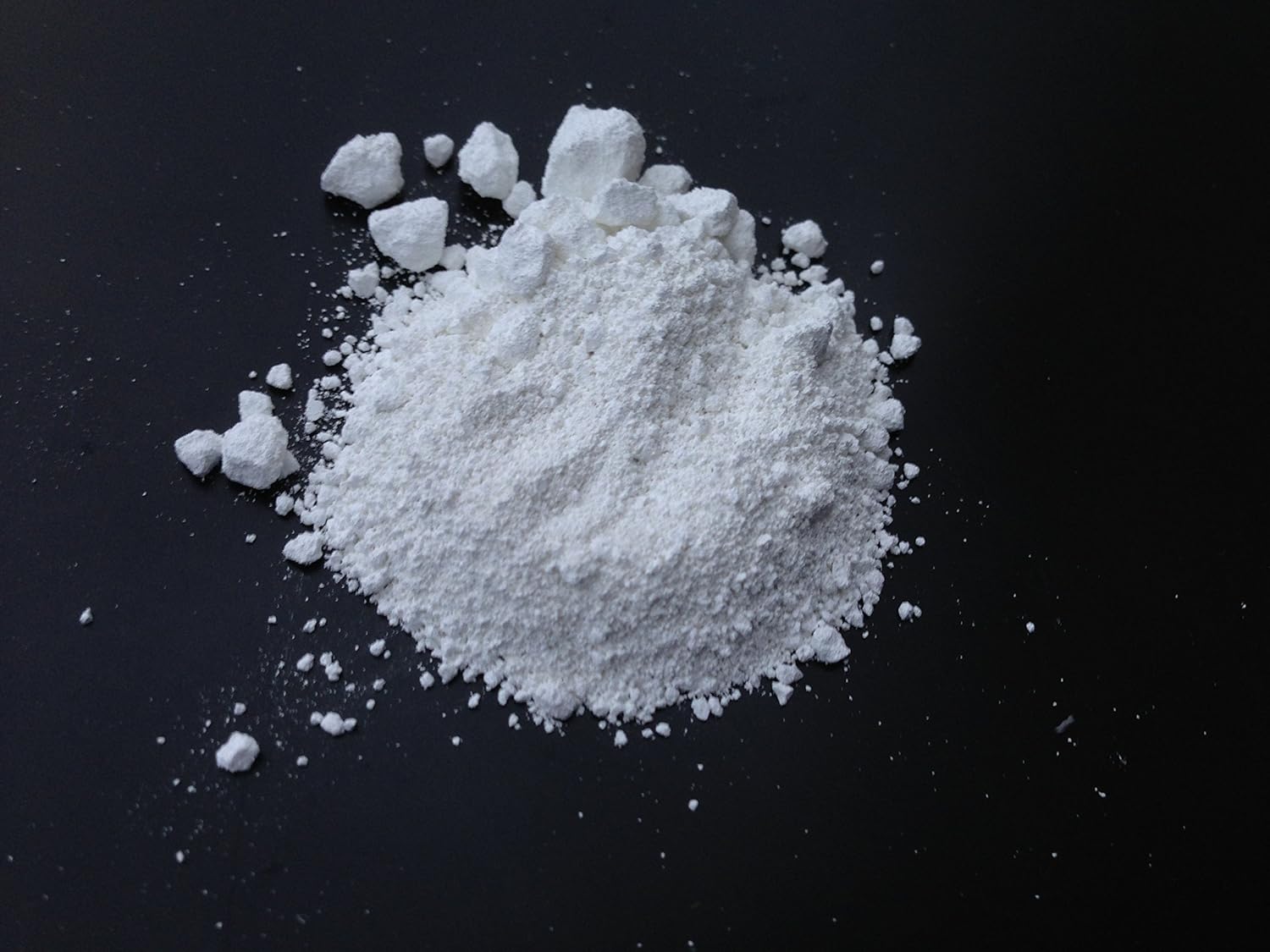
White Pow(d)er


Amazon.com : GlobMarble Titanium Dioxide White Concrete Pigment 1 ...

The Shamanic practitioner from upstate New York created a powder that my friend offers me. It is the morning of the first of many days of protests after the execution of George Floyd, the latest lynching white Americans are-yet again-shocked by. The Shamanic practitioner from upstate New York created a mixture POC can sprinkle on their bodies, their cars, their homes, to protect them from racist acts. The first ten vials of the POC Protection Powder are free and my friend is letting me in on this free-for-a-limited-time-only protection.

At first I am confused. Why did she think of me?

I’m Coptic. Meaning, I am Egyptian Orthodox. And, like other Egyptian immigrants I know, I’ve spent most of my life striving for whiteness. Since we can’t fully be who and what we are in the US, we assimilate into the culture that’s most ‘successful.’ In that pursuit, like many Middle Easterners, I’ve disassociated myself from POC.

It’s only recently I’m coming to understand myself as a brown woman and realize I’ve always been perceived as such. Hence the offer of POC PP. At first I relish the acknowledgement of my brownness. But it is fleeting. She categorized me-a supremacist habit, no? I’ve not shared my experiences or reflections about my ethnicity with her. Why does she get to make an assumption about me? OH. She thinks I might be in constant jeopardy. I am.

But not in the ways she assumes.

To be Coptic, an immigrant and American means to tread in the ocean of ambiguity. I am pulled by the undertow of internalized supremacy while the unmet hunger for belonging crashes over me, each wave a reminder that I am not black, white, Latinx or Asian, the known identity harbors in the Midwest. Since Copts are a persecuted minority in Egypt, even the Middle Eastern harbor is fraught; I have internalized the antipathy toward Muslims common in the Coptic community.

I respond as I have most of my life when white women say things that make me uncomfortable: I answer deferentially, almost obsequiously. Tell myself: she’s trying to help, she thought of me. Tell her: I’d think about the POC PP. I thank her. Repeatedly. Numbly. But in my mind she shifted from friend to acquaintance. And she won’t know that because that’s something else I’ve always done: use that slap of ignorance and my discomfort as a slab of concrete for the wall between us.

I try to imagine POC spraying protection powder in beds, shaking some in running shoes, daubing it on necks like aftershave. Maybe in a bag of skittles or on the couch when playing video games or used as seasoning at BBQs.  I try to picture Indigenous women combing it into their hair; children at the border nestling with it on concrete floors under sliver blankets. I imagine it swept in the halls of schools in prison pipeline zip codes. I try to imagine this powder snowing on red, yellow, brown and black bodies in ghettos, reservations, cages and prisons, liberating entire communities, countries even. How much POC PP is there?

I want to believe in Shamanic work, even done by white people. But the Shamanic practitioner from upstate New York provides this unnecessary disclaimer: it will not protect against systemic racism.

Yeah.

Obviously.

Look who created it.

 I've moved!  Please visit me at   https://www.marysilwance.com /